
Taking Your Car to the Dealer Under Warranty: When You Need a Tow Truck
A warning light came on, the temperature climbed or the gearbox started jerking, and your car is still under warranty? This guide explains when to tow your car to the dealer instead of driving, how to coordinate with the service center and what to document before loading.
Last updated: October 2026 · By the Satha Alam team
- Open 24/7
- 10+ years in KSA
- 19K+ vehicles towed
Towing your car to the dealer: when is it the right call?
Many owners of new cars in Jeddah face the same moment: the car is still under warranty, and suddenly a warning light appears on the dashboard, the engine sounds different or the gearbox hesitates. The first question is simple: do I drive it to the dealer myself or call a tow truck? In some cases, choosing to tow your car to the dealer is not a luxury. It protects the car and saves you a long discussion at the service desk.
The logic is straightforward. Some faults get worse with every kilometre. Overheating can turn a thermostat or fan problem into cylinder head damage, and a slipping gearbox can turn a sensor fault into internal transmission wear. Driving in that condition risks turning a small repair into a big one, and invites questions about how the damage happened.
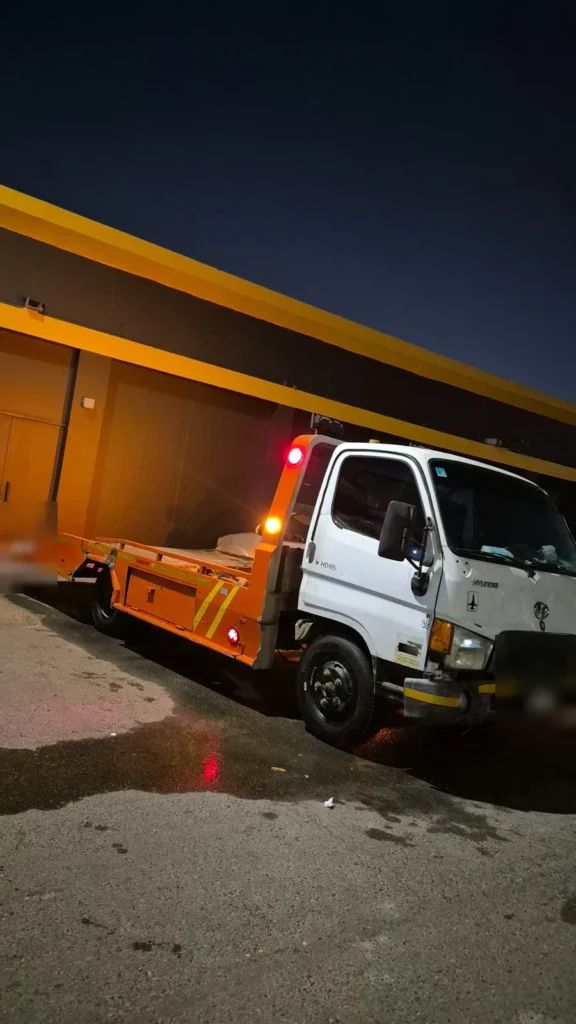
This article covers when to call a flatbed instead of driving, what the common warning lights usually mean, why driving a faulty car can complicate a warranty claim, how to coordinate with the service center before we move and what photos and readings to take before loading. Satha Alam has been moving cars inside Jeddah for more than ten years, including many new and luxury cars going to service centers on our tilting hydraulic flatbed, with the car fully on the bed and no wheels touching the road.
Signs that say: do not drive, call a flatbed
Not every warning light means the car must be towed. Some alerts allow a gentle drive to a nearby service center, while others clearly tell you to stop now. As a general rule, if the warning is red, or comes with an odd noise, a burning smell, smoke or an obvious loss of power, it is safer to stop and arrange transport. The owner’s manual, in the glovebox or the manufacturer’s app, is always the first reference for what each symbol means.
These are the most common situations where we see a flatbed as the safer way to get the car to the dealer:
- The temperature gauge hits red, an engine overheating alert appears, or steam rises from under the bonnet.
- The red oil pressure light comes on while driving, even if it disappears a moment later.
- The check engine light is flashing rather than steady, which often signals a misfire that can harm the engine or catalytic converter.
- The gearbox refuses to shift, jerks hard, or the car enters limp mode with limited speed.
- Knocking or metal grinding from the engine or the wheels.
- A brake system alert or red brake light, or a pedal that sinks further than usual.
- A clear fluid leak under the car, especially engine oil, coolant or transmission fluid.
- In EVs and hybrids: a drive system or high-voltage battery fault, or a message asking you to stop safely.
Warning lights: when to continue and when to stop
This table gives a general picture of common alerts and how most drivers handle them safely. It does not replace the owner’s manual or the dealer’s advice, since every brand has its own symbols and instructions, but it helps you decide quickly at the roadside.
| Alert | What it usually means | Safest action |
|---|---|---|
| Red engine temperature | Engine running hotter than normal | Stop safely, switch off, do not open a hot radiator cap, call a flatbed |
| Red oil pressure | Low oil pressure, engine not lubricated properly | Stop immediately, do not continue, towing is safer |
| Steady amber check engine | Sensor or emissions fault | Usually fine to drive gently, book with the dealer |
| Flashing check engine | Misfire that may damage the engine | Slow down, stop safely, towing is preferred |
| Gearbox alert or limp mode | Transmission or control fault | Avoid long drives, tow to the dealer |
| Red brake warning | Low brake fluid or system fault | Do not risk driving, the flatbed is the safe option |
| Battery or charging | Alternator or charging system not charging | The car may shut off at any moment, tow if the trip is long |
| EV drive system fault | Electric motor or battery fault | Stop, follow the screen message, transport with all wheels off the ground |
Overheating and gearbox faults grow with every kilometre
Jeddah summers are long and humid, and traffic on King Abdulaziz Road, Tahlia Street and Madinah Road keeps engines running for hours at low speed. That stresses the cooling system, and when a fan, thermostat or coolant leak fails, the temperature rises fast. Many drivers try to reach the dealer because it is close, switching off and restarting along the way. That habit can turn a simple fault into head gasket or cylinder head damage.
Automatic and CVT gearboxes are sensitive to heat and low fluid. When the gearbox starts jerking, delays shifts or enters limp mode, the car is protecting itself. Driving on increases friction inside, and the repair can grow from a software update or sensor to a full gearbox strip-down. On a flatbed all wheels are off the ground, so the gearbox and drivetrain do not turn during transport.
Even if the car still drives, ask yourself: is the dealer far? Are there highways, signals and traffic on the way? Is it rush hour or a hot afternoon? The more of these apply, the more likely the fault grows on the way.
Car stuck? Let us pick it up now
Call us or send your location on WhatsApp. We will tell you the price and arrival time in minutes. The Satha Alam team is ready day and night.
Electric and hybrid cars under warranty
EVs and hybrids are increasingly common in Jeddah, and most are new and under warranty. Their electric motors are connected to the wheels, so turning wheels on the road can make a motor generate power or move in ways it was not designed for during towing. That is why most manufacturers recommend transporting them on a flatbed with all wheels off the ground.
If you see a drive system or high-voltage battery fault, the car will not move, or the 12V battery is weak and the screen is dead, do not try to fix it yourself. Contact the dealer or the brand’s customer service and follow the transport mode instructions in the manual. We then move it on our hydraulic flatbed after confirming its weight, because EV batteries are heavy and our capacity suits vehicles up to about 3.5 tons.
We handle these cars calmly: correct tie-down points, no pressure near the battery underneath, the winch to pull the car up if it cannot move, and straps on all four corners.
Why driving a faulty car can complicate a warranty claim
Warranty terms differ by brand and model, so we cannot give a general ruling on your case. The common understanding at most service centers is that warranty covers manufacturing defects, and there may be questions if damage grew because the car was driven after a clear warning. If the oil light came on and you drove a long way, or the temperature rose and you did not stop, the technician may ask about the circumstances.
So we suggest three simple steps: stop when a serious warning appears, call the dealer or customer service line and ask what they prefer, and document the car with photos before loading. Some dealers offer roadside assistance as part of the warranty, so ask about it first. If it is not available when you need it, you can book a private flatbed. Always confirm with the dealer what they need from you, since they decide on the warranty.
We do not take part in warranty decisions and make no promises about them. Our job is to move the car safely, without its engine or gearbox turning, and hand it to the service center in the same condition we received it, with photos before loading and after delivery if you want them.
How to coordinate with the service center before we move
The biggest time-wasters on dealer trips are arriving at a closed service center, nobody being there to receive the car, or reception asking for an appointment. A few steps before we move avoid all of that:
1. Call the dealer or book an appointment
Ask whether they accept a car arriving by flatbed and whether you need an appointment or can bring it straight to reception.
2. Check receiving hours
Service centers have set receiving times and some close on Fridays. We time our arrival to their hours so the car does not wait at the gate.
3. Decide who receives the car
If you cannot come with us, agree on a service advisor or send someone on your behalf, with the key, registration and any papers they ask for.
4. Send us the details
Your live location, the service center pin on the map, the car type, a description of the fault and whether it runs.
5. Get the price and confirm
We give you a clear price before we move and agree on a pickup time that gets us to the dealer during working hours.
What to document before loading
Documenting takes two minutes and can save a long discussion later. Before loading and again on arrival at the dealer, take these photos and notes:
Send the photos to yourself on WhatsApp or email so they carry a clear date, and get a receipt or message from the service center showing the car’s condition, mileage and the fault as reception recorded it.
- A clear photo of the dashboard with the ignition on if possible, showing the warning lights.
- A photo of the odometer, since the service center records mileage at intake.
- Photos of all four sides, the wheels and both bumpers.
- A photo or short video of any leak, steam or unusual noise.
- A note on your phone: when the fault started, what you were doing and whether you stopped right away.
- For EVs: the battery level and the fault message on the screen.
Round trip: to the dealer and back home
Many customers book a two-way job: we take the car from home or the breakdown spot to the dealer, and after the repair we bring it back home or elsewhere in Jeddah. This helps when the service center is far, or when the car cannot move because a part is delayed and you would rather keep it at home until it arrives.
The return leg works the same way: confirm the handover time with the dealer, have the job card or invoice ready and tell us the time that suits you. We check and photograph the car with you or your representative before loading. For luxury or low cars we take the loading angle carefully so the front bumper does not touch the bed.
Booking both legs early makes planning easier, but each leg is priced on distance, timing and the car’s condition, and we tell you clearly before every move.
Common mistakes we see on dealer trips
From our experience moving cars to service centers in Jeddah, these mistakes most often delay repairs or add stress:
Ignoring the warning
The driver pushes on because the dealer is close, and the fault grows in the last few kilometres. If it is red, stopping costs less than a big repair.
Arriving after reception closes
The car arrives at a locked gate and has to wait or go back. Call ahead and check the time.
Nobody to receive the car
The key is with the owner at work. Arrange who receives it before we move.
Leaving personal items inside
Remove valuables and important papers before loading, since the car may stay at the service center for days.
Restarting again and again
Repeatedly starting a hot engine or a stuck gearbox to test it can add damage. Leave diagnosis to the technician.
Towing an EV the wrong way
Towing with wheels turning may harm the drive system. Most manufacturers recommend all wheels off the ground.
Book a tow to the dealer with Satha Alam
If your car is under warranty and a fault leaves you unsure, call or WhatsApp us on 058 056 4950. We work 24 hours a day, 7 days a week, inside Jeddah and its districts, and move your car from home, work or the roadside to the service center.
Send your live location, the dealer’s location, the car type, the fault and a dashboard photo if you can. We give you a clear price before we move and time our arrival to the dealer’s receiving hours. How long we take to reach you depends on your location and traffic, and we give you an honest estimate rather than promises of minutes.
FAQ
Frequently asked questions
Can I drive to the dealer with the check engine light on?
Does towing on a flatbed affect my warranty?
Why not use the dealer's roadside assistance?
How much is a tow truck to the dealer in Jeddah?
Who receives the car at the dealer if I cannot go?
Do you take electric cars to the dealer?
Can you take my car from Jeddah to a dealer in another city?
What should I send to book a tow to the dealer?
About Satha Alam
Satha Alam provides car towing and transport in Jeddah. 10+ years in Saudi Arabia, 19,000+ vehicles towed safely and 94% customer satisfaction. Available for you 24 hours a day.
Our tow truck services in Jeddah
Related articles
Ordering a tow truck takes a minute if you know what to send. A ready-to-copy message, live location steps for iPhone and Android, and how to describe your spot on a highway, at night or when you are lost.
Your electric or hybrid car stopped suddenly? Before anyone tows it with its wheels on the road, read this guide: why a flatbed with all wheels off the ground is what most manufacturers recommend, what to do before we arrive, and how we handle weight and tie-down points.
Before you hand your car to any tow truck in Jeddah, know what to ask and what to look at. A practical guide from the Satha Alam team with clear criteria and a scoring table you can use yourself, no rankings and no flattery.
Car stuck? Let us pick it up now
Call us or send your location on WhatsApp. We will tell you the price and arrival time in minutes. The Satha Alam team is ready day and night.